


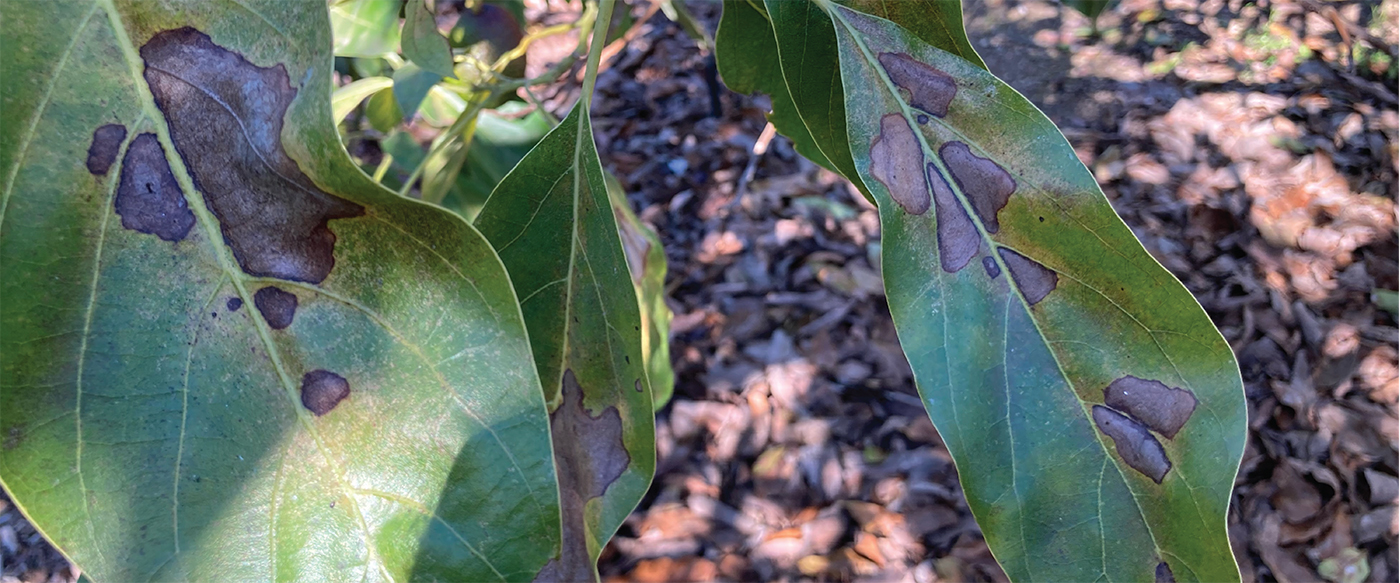
Recently we’ve spotted the Lace bug pest in groves in Carpinteria and northward.
Native to the southeastern United States, the avocado lace bug is a notable pest that causes damage to avocado trees. Lace bugs can cling onto clothing, so it is important to brush off or use compressed air to blow off your pant leg, jackets sleeves, or other articles of clothing prior to exiting groves that contain lace bugs. Small micro-actions like these can help mitigate the spread of lace bugs.
Here are some essential facts about this pest:
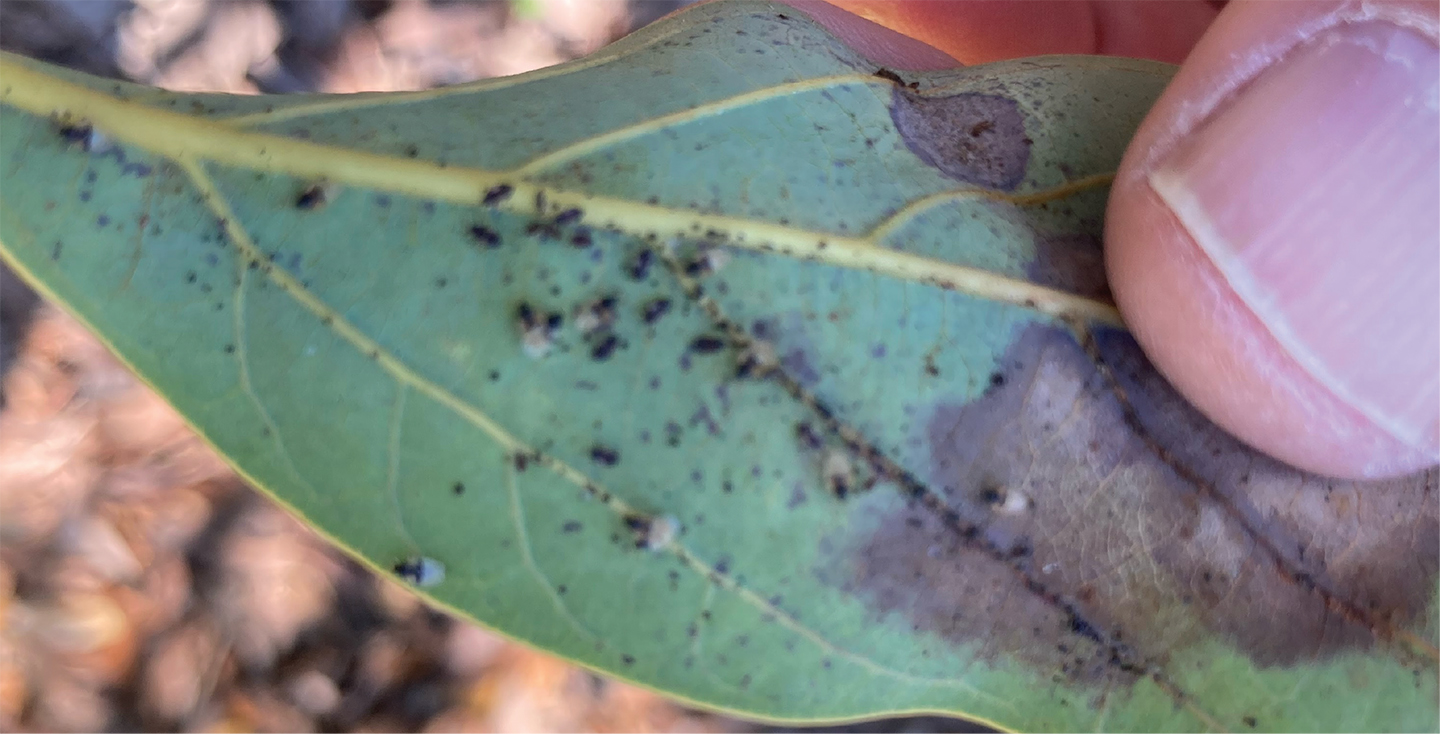
- Appearance: Eggs are laid in an irregular pattern, sometimes in loose rows, stuck to the lower leaf surface and are covered with irregular globules of a black, sticky, tar-like substance excreted by adults that may protect eggs from natural enemies. Eggs will appear like grains of black pepper. Adult avocado lace bugs are small, have clear, lacy wings (about 2mm long) with a single dark band on their bodies, yellow legs, and antennae. They are visible to the naked eye.
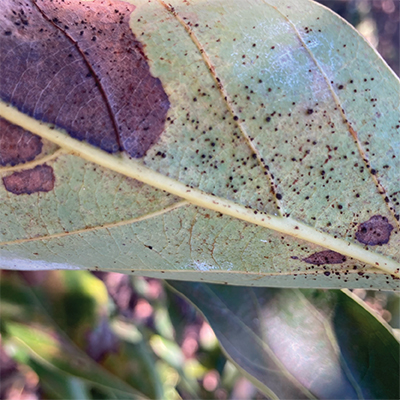
- Life Cycle: Lace bugs are immobile most of the time. They feed on the underside of leaves, causing chlorotic blotches that can become necrotic. Severely damaged leaves may drop prematurely.
- Damage: Heavy lace bug feeding can lead to defoliation, sunburned fruit and wood, and stressed trees, potentially reducing yield.
- Location: Lace bugs have been spotted in groves spanning from San Diego to Carpinteria in northern regions. The lace bugs live in colonies on the lower surfaces of leaves, often with adults, eggs and nymphs together.
- Other Hosts: Besides avocado trees, the lace bug also feeds on the camphor tree (Cinnamomum camphora).
- Timing: Lace bug populations tend to build in July, peak around September, and decline to low densities from January through May. Because they are largely immobile, they tend to disappear as older leaves drop off and the new leaves emerge during the spring flush.
- Management: Management strategies may include restrictions on the movement of host plant materials, insecticide screening trials, and evaluation of natural enemy releases.
- Natural Enemies: Green lacewing larvae were historically identified as natural enemies of avocado lace bug. However, recently Erico Ferro, PCA, notes he has not observed natural enemies feeding on any of the different stages of lace bug (egg, nymphs or adults) including lacewing larvae. Predators may feed on them but should not be relied on to control a population.
- Pesticides: There are several pesticides that can kill lace bugs and are tolerated by green lacewing larvae.
- Control: UC recommends various products to help control lace bugs. To learn more about how to control the pest, email info@indexfresh.com for UC’s management guidance and evidence-based recommendations from PCA Enrico Ferro.
Sources:
https://cisr.ucr.edu/invasive-species/avocado-lace-bug
https://ipm.ucanr.edu/agriculture/avocado/avocado-lace-bug/
https://veseris.com/default/resources/post/avocado-lace-bug
https://ceventura.ucanr.edu/index4.cfm/%3Ca?blogtag=avocado+lace+bug&blogasset=109383
https://biocontrol.ucr.edu/avocado-lace-bug
https://www.californiaavocadogrowers.com/sites/default/files/2023-11/Avocado-lace-bug.pdf
https://biocontrol.ucr.edu/media/591/download
https://ipm.ucanr.edu/agriculture/avocado/
https://ipm.ucanr.edu/home-and-landscape/avocado-lace-bug/pest-notes/
https://ipm.ucanr.edu/agriculture/avocado/avocado-lace-bug/#gsc.tab=0